
 Talento India
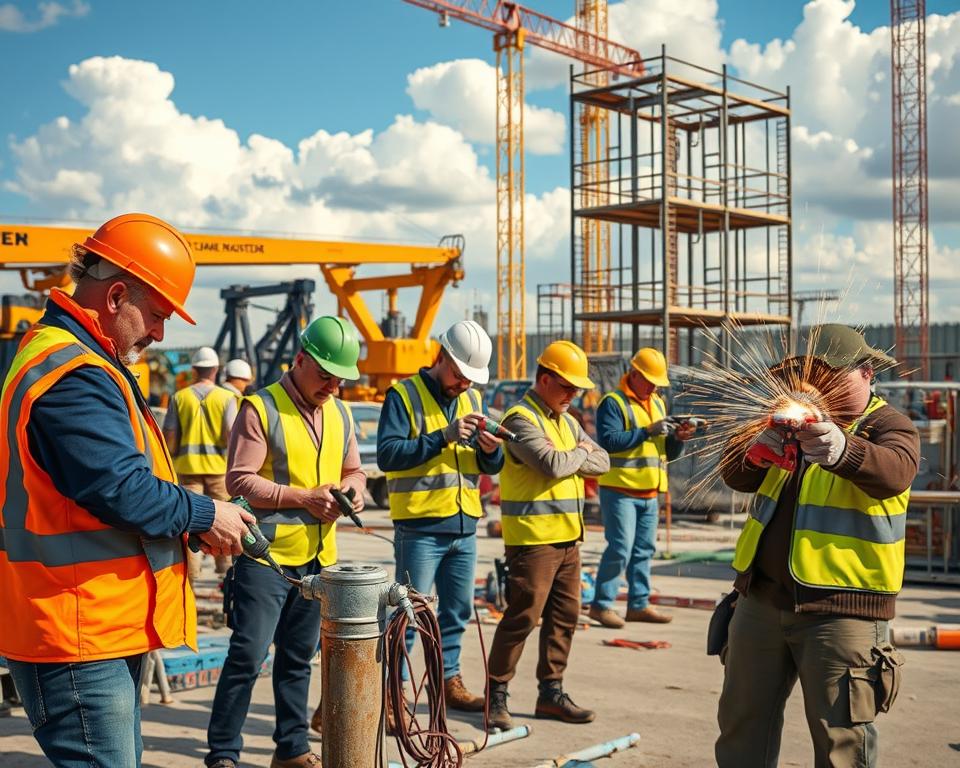
The need for skilled workers in India is growing fast. This is because of new building projects and more need for special services. Skilled worker openings are getting more common in many areas.
Jobs like electricians, plumbers, and technicians are key for keeping and improving the country’s buildings. So, blue collar jobs are seeing a big increase.
Key Takeaways
- Growing demand for skilled tradespeople in India.
- Increasing need for specialised services across various sectors.
- Prominent skilled worker openings in infrastructure development.
- Rise in blue collar jobs due to infrastructure advancements.
- Essential roles of electricians, plumbers, and technicians in maintaining national infrastructure.
The Growing Demand for Skilled Blue Collar Workers in India
The need for skilled tradespeople in India is growing fast. This is because of more people moving to cities and the need for better infrastructure. As the country gets more modern, the demand for skilled workers in many areas is clear.
Current Market Trends for Skilled Trades in Urban and Rural Areas
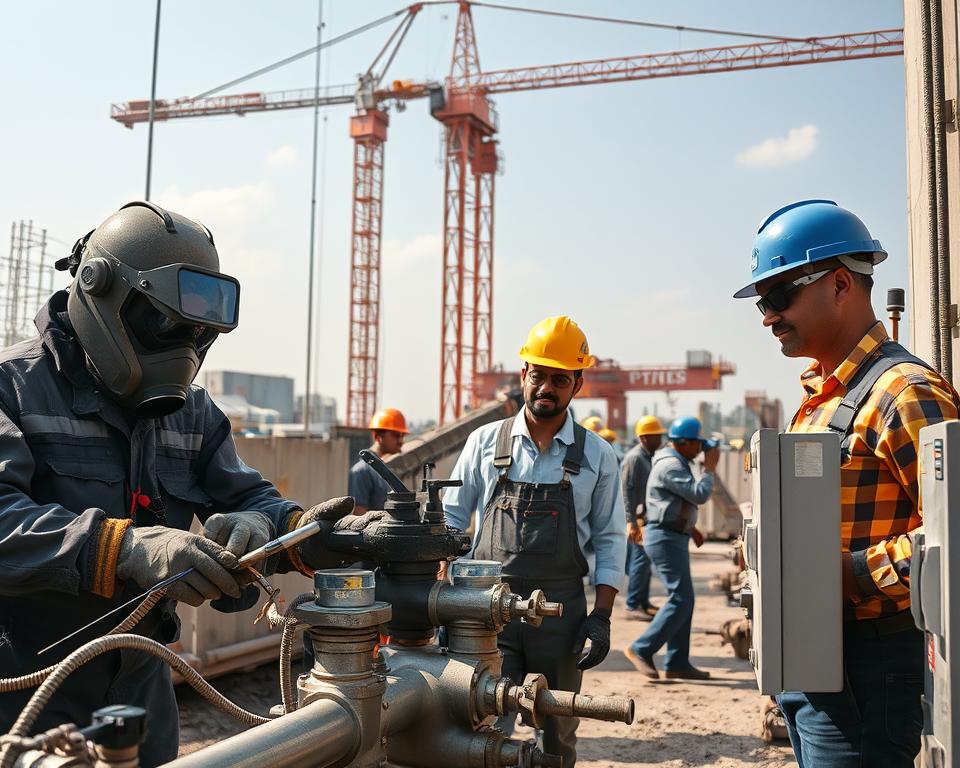
In cities, there’s a big need for skilled tradespeople, mainly in building and making things. This is because of government plans to improve the infrastructure. There’s also a lot of demand for homes and business spaces.
Rural areas are also seeing more demand, but it’s growing slower. This is mainly because of new farming tools and projects to improve rural areas.
The market is moving towards more specific skills. There’s a big push for skills in renewable energy, smart homes, and new ways of making things. This means new chances for workers who can learn new technologies.
Impact of Infrastructure Development and Smart City Projects
Projects to improve infrastructure and make cities smarter are driving the demand for skilled workers. The Smart Cities Mission and other projects are creating lots of jobs for electricians, plumbers, and technicians. These jobs need workers who know about smart tech and green building.
These developments are not just for cities. They also help rural areas by making them more connected. This leads to more jobs and a need for skilled tradespeople in these areas too.
Understanding Electrician, Plumber & Technician Jobs – Blue Collar & Skilled Worker Openings
The need for skilled workers like electricians, plumbers, and technicians is growing in India. As the country’s infrastructure grows, these professionals are becoming more important.
These trades offer many career paths. You can work in installation, maintenance, repair, or management. Knowing the different roles and specialisations is key for those interested in these careers.
Electrician Roles and Specialisations in India
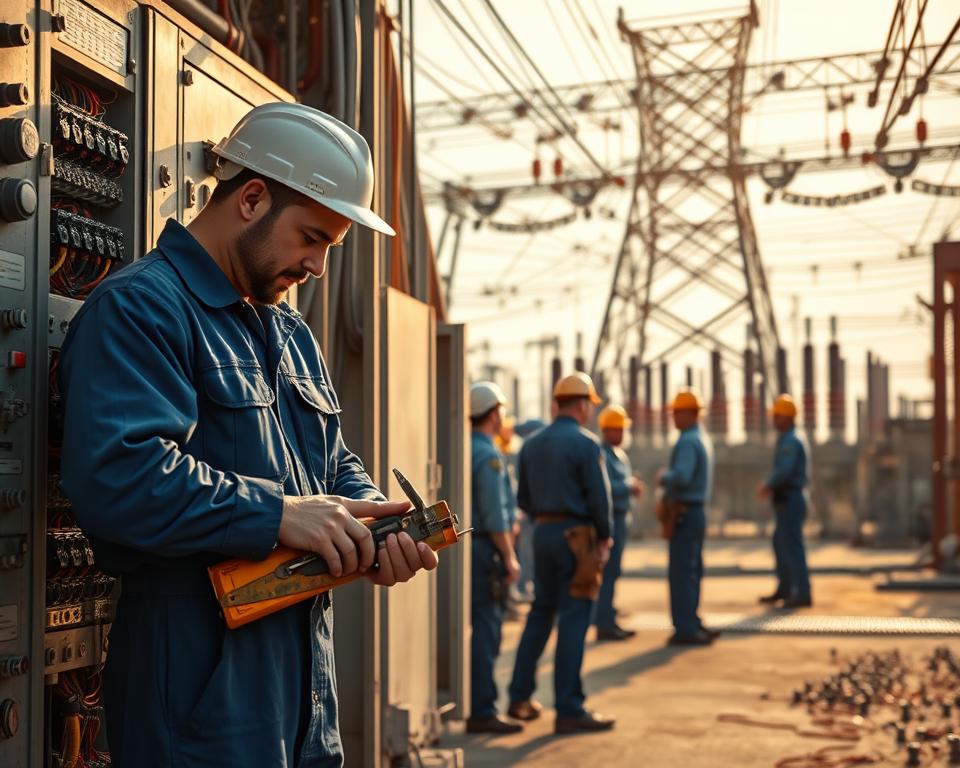
Electricians in India can focus on many areas. This includes domestic wiring, industrial electrical work, and maintaining electrical systems. Specialisations like LV and HV electrical work, electrical contracting, and solar panel installation are in demand.
Electricians work on projects from homes to big industrial sites. With experience, they can become supervisors or start their own businesses.
Plumbing Career Paths and Opportunities
Plumbers are key to keeping water systems working right. In India, they can specialise in pipe installation, water treatment, and hydronic heating.
Plumbing offers many career paths. You can work on construction sites or maintain and repair systems. Experienced plumbers can become managers or start their own plumbing businesses.
| Trade | Specialisations | Career Paths |
|---|---|---|
| Electrician | LV/HV Electrical Work, Solar Panel Installation | Electrical Contractor, Supervisor |
| Plumber | Pipe Installation, Water Treatment Systems | Plumbing Contractor, Maintenance Manager |
| Technician | HVAC, Automotive, Industrial Maintenance | Service Technician, Maintenance Supervisor |
Technician Positions Across Various Industries
Technicians are needed in many fields, like HVAC, automotive, and industrial maintenance. They install, maintain, and repair equipment and systems.
The demand for skilled technicians is growing. They work in places like manufacturing plants and residential service providers.
Essential Qualifications and Skills Required for Success
To do well in electrician, plumber, and technician jobs, you need certain skills. You’ll need educational qualifications, technical certifications, and soft skills. These are key for success.
Educational Requirements by Trade and Position Level
The education needed varies by trade and job level. For electricians, plumbers, and technicians, a certificate or diploma is often required. More advanced jobs might need a degree or special certifications.
For example, electricians start with a vocational training certificate. They can then get higher certifications like the Master Electrician License. Plumbers start with a basic certificate and can move to special areas like medical gas plumbing.
| Trade | Basic Qualification | Advanced Qualification |
|---|---|---|
| Electrician | Certificate/Diploma in Electrical Trades | Master Electrician License |
| Plumber | Certificate/Diploma in Plumbing | Specialised Certifications (e.g., Medical Gas Plumbing) |
| Technician | Certificate/Diploma in Relevant Field | Advanced Diplomas or Degrees |
Technical Certifications and Industry Standards in India
Technical certifications are very important for electricians, plumbers, and technicians. In India, the National Council for Vocational Training (NCVT) and City and Guilds are well-respected. These certifications show that you meet industry standards and know the latest tech and practices.
Soft Skills That Enhance Employability in Skilled Trades
Some soft skills are also very important. Skills like problem-solving, communication, teamwork, and time management are valued. Employers want people who can work well, adapt easily, and give great customer service.
Working on these soft skills can open up more job opportunities and help you move up in your career.
Training Pathways for Aspiring Skilled Workers
Choosing the right training is key to becoming a skilled worker. You can pick from ITI courses, polytechnic programmes, or government apprenticeships. These paths help you learn the skills needed for your trade.
ITI and Polytechnic Programmes: Admission Process and Top Institutes
ITIs and polytechnics offer training in trades like electrical and plumbing. To get in, you apply online, then go through counselling and get a seat based on your score.
Top ITIs and polytechnics in India have great facilities and teachers. For example, the Government ITI, Bangalore, is famous for its training.
| Institute Name | Location | Specialisations |
|---|---|---|
| Government ITI | Bangalore | Electrical, Plumbing |
| Delhi Polytechnic | Delhi | Technical, Mechanical |
| Chennai Trade School | Chennai | Electrical, Welding |
Government Apprenticeship Schemes and How to Apply
Apprenticeships offer work experience and a salary. The National Apprenticeship Promotion Scheme (NAPS) helps promote apprenticeships in many fields.
To apply, register on the Apprenticeship Portal. Choose your trade and go through a selection. If you succeed, you’ll work in companies and learn on the job.
“Apprenticeships offer a unique blend of theoretical knowledge and practical skills, making apprentices highly sought after by employers.”
Skill India Initiatives and NSDC Training Programmes
Skill India aims to improve vocational training and job skills. The National Skill Development Corporation (NSDC) runs programmes with industry partners. They focus on new sectors and tech.
- Pradhan Mantri Kaushal Vikas Yojana (PMKVY)
- NSDC’s Sector Skill Councils
- Skill Development Initiatives by State Governments
These efforts aim to fill the skill gap. They prepare workers for the changing job market.
How to Prepare for a Career in the Skilled Trades
Starting a career in skilled trades needs a good plan. You must get the right mix of technical skills, practical experience, and long-term planning.
Building Technical Knowledge Through Structured Learning
Getting a strong base in technical skills is key. You can do this with ITI and polytechnic courses. They give a deep understanding of the trade.
Technical certifications and following industry standards also help. They make you more employable.
Gaining Hands-on Experience Through Projects and Internships
Getting hands-on experience is very important. Projects and internships let you use what you’ve learned in real life. They help you get practical skills and understand how things work.
They also help you meet people in your field. This is great for your career.
Developing a 5-Year Career Roadmap in Your Chosen Trade
Having a career roadmap is vital for success. It means setting goals, knowing what skills and certifications you need, and planning for growth. A clear plan keeps you focused and motivated.
By mixing technical skills, practical experience, and a career plan, you’re ready for a fulfilling career in skilled trades.
Where to Find Blue Collar Job Openings in India
Looking for blue-collar jobs in India is easier now. Digital platforms and government help have made finding jobs simpler for skilled workers.
Top Job Portals and Trade-Specific Websites for Skilled Workers
Many job sites focus on blue-collar jobs like electrician, plumber, and technician roles. Top sites include:
- Naukri.com
- TimesJobs
- indeed.co.in
- Shine.com
These sites list many jobs in different fields. This helps job seekers find the right job easily.
Government Employment Exchanges and Rozgar Melas
Government job exchanges are key for finding jobs. They connect job seekers with employers. Rozgar Melas (job fairs) also help by allowing face-to-face talks between employers and job seekers.
Industry Associations and Trade Unions as Job Sources
Industry groups and trade unions are great for job hunting. They have job boards for specific trades or industries. Some important groups are:
| Industry Association | Trade/Industry |
|---|---|
| Electrical Contractors Association | Electrical Work |
| Plumbers Association | Plumbing |
| Technicians Guild | Technical Services |
Mobile Apps Connecting Skilled Workers with Employers
Mobile apps are now a handy tool for job hunting. Apps like JobSearch and Naukri let you search for jobs anytime. This makes it easy to keep up with new job listings.
Crafting an Effective CV for Skilled Trade Positions
A good CV is key when applying for skilled trade jobs. It shows your skills, certifications, and experience. This makes it easier for employers to find the right person.
Make sure your CV fits the trade and job you want. Focus on the skills and certifications that matter most.
Highlighting Technical Competencies and Certifications
Technical skills and certifications are very important. Your CV should list your skills, like electrical wiring or plumbing. Also, include any certifications from groups like the Electrical and Electronics Systems Trade Association.
Key Technical Competencies to Highlight:
- Trade-specific skills (e.g., electrical, plumbing, HVAC)
- Certifications from recognized industry bodies
- Proficiency in relevant tools and equipment
Documenting Project Experience and Practical Achievements
Practical experience is key in skilled trades. Your CV should talk about the projects you’ve done. Mention the tasks and the results you got.
Try to give numbers to show how good you are. For example, “Did electrical work for 20 homes in 3 months, 15% more than expected.”
| Project | Tasks Performed | Outcomes |
|---|---|---|
| Electrical Installation Project | Wiring, installation of electrical panels | Completed within 3 months, 15% above productivity target |
| Plumbing Maintenance | Pipe repairs, fixture installations | Reduced customer complaints by 20% |
Trade-Specific CV Templates and Examples
Use CV templates made for your trade. There are ones for electricians and plumbers. These templates have special sections for your trade, so you don’t forget anything important.
By following these tips and making your CV fit the job, you’ll have a better chance of getting an interview. And maybe even the job you want.
Mastering the Job Application Process
To stand out in the competitive landscape of skilled trades, mastering the job application process is key. This means understanding job descriptions, tailoring applications, and communicating well with employers.
Decoding Job Descriptions for Electrician, Plumber and Technician Roles
Job descriptions are more than a list of tasks. They show what employers want in a candidate. For electrician, plumber, and technician jobs, it’s important to understand the language used. This helps identify the skills and qualifications needed.
- Carefully read the job description to identify key phrases and requirements.
- Understand the employer’s needs and expectations.
- Tailor your application to match the job requirements.
Customising Applications for Different Employers and Sectors
Customising your job application is vital to increase your chances of success. Different employers and sectors have unique needs. It’s important to adapt your application to fit these needs.
| Sector | Key Requirements | Customisation Tips |
|---|---|---|
| Construction | Site experience, safety protocols | Highlight relevant project experience, safety certifications |
| Manufacturing | Technical skills, machinery operation | Emphasise technical training, machinery operation experience |
| Residential Services | Customer service, problem-solving | Focus on customer service skills, problem-solving examples |
Effective Communication Strategies with Potencial Employers
Effective communication is key to making a good impression on employers. This means being clear, concise, and professional in your application and any interactions.
Key Strategies:
- Use clear and concise language in your application.
- Be professional in your communication, including emails and phone calls.
- Follow up with employers to express continued interest in the position.
Preparing for Technical Interviews and Skill Assessments
Getting ready for technical interviews and skill tests is key for electricians, plumbers, and technicians. These tests check your technical know-how, problem-solving skills, and how well you communicate.
Common Technical Questions for Electricians, Plumbers and Technicians
Technical interviews ask many questions to see what you know and have done. Electricians might talk about circuit analysis, electrical safety, and wiring. Plumbers could discuss pipe sizes, water treatment, and drainage designs. Technicians, based on their area, might be asked about keeping equipment in good shape, fixing problems, and safety rules.
| Trade | Common Technical Questions |
|---|---|
| Electrician | Circuit analysis, electrical safety, wiring practices |
| Plumber | Pipe sizing, water treatment, drainage system design |
| Technician | Equipment maintenance, troubleshooting, safety standards |
Practical Skill Demonstrations: What Employers Look For
Practical skill tests are a big part of getting hired. Employers want to see you can use your knowledge safely and well. For example, an electrician might have to wire a circuit. A plumber might show how to fit pipes. Technicians might need to fix equipment problems.
Professional Presentation and Communication During Interviews
Looking professional and talking well are key in technical interviews. Wear the right clothes, bring all needed papers, and talk clearly about your skills and experiences. Good communication shows you’re confident and skilled, which employers like.
By working on these points, you can do better in technical interviews and skill tests. This can lead to a great career in your chosen trade.
Salary Expectations and Negotiation Strategies
Knowing what you can earn is key for those in skilled trades like electricians and plumbers. As demand grows in India, knowing your worth can boost your career. It’s important to know the salary ranges and how to negotiate well.
Current Salary Ranges Across Different Regions of India
Salaries for skilled trades vary across India. Electricians and plumbers in big cities like Delhi or Mumbai earn more. In smaller towns or rural areas, they earn less.
The average monthly salary for an electrician is between ₹15,000 to ₹30,000. Plumbers earn between ₹12,000 to ₹25,000. Technicians can earn over ₹40,000 in cities.
Regional Variations:
- Metro cities: Higher salaries due to increased cost of living and demand.
- Tier 2 cities: Moderate salaries with a growing demand for skilled trades.
- Rural areas: Lower salaries but with potentially lower living costs.
Public vs. Private Sector Compensation Differences
Salaries for skilled trades differ between public and private sectors. Government jobs offer more security and benefits but lower pay. Private sector jobs might pay more but with less job security.
“The private sector often offers higher salaries for skilled trades, but government jobs provide stability and additional benefits.” – Industry Expert
Negotiating Better Pay, Benefits and Working Conditions
Negotiating salary and benefits needs preparation and knowing your worth. Skilled tradespeople should research the market, highlight their skills, and show their value. Good negotiation strategies include:
- Researching market salary standards.
- Highlighting relevant certifications and experience.
- Demonstrating the value you can bring to the employer.
By knowing the salary ranges and using good negotiation skills, skilled tradespeople in India can get better pay and improve their careers.
Career Advancement Opportunities in Skilled Trades
The skilled trades sector offers many chances for career growth. Workers can climb the career ladder as they gain experience and skills. This allows them to explore different paths for professional development.
Moving Up to Supervisor, Foreman and Project Manager Roles
One key way to advance in skilled trades is to take on supervisory or management roles. With time and skill, electricians, plumbers, and technicians can become supervisors or foremen. They will lead teams and manage projects. To do this, they must learn leadership, project management, and might need extra certifications.
- Supervisory roles involve managing teams and coordinating project activities.
- Foremen are responsible for ensuring projects are completed on time and within budget.
- Project managers oversee the entire project lifecycle, from planning to execution.
Specialisation Paths for Electricians, Plumbers and Technicians
Choosing a specialisation can boost your career. For example, electricians can focus on solar panels or industrial electrical work. Plumbers might specialise in medical gas systems or hydronics. Technicians can work on HVAC, automotive, or industrial machinery.
Specialisation benefits include:
- Increased earning due to high demand for special skills.
- Chances to work on complex and challenging projects.
- Improved credibility and reputation in the industry.
Starting Your Own Service Business or Contracting Firm
For those who like to start their own business, this is a great option. It needs technical skills and business knowledge. This includes managing money, marketing, and customer service.
“Entrepreneurship in the skilled trades can be rewarding, with autonomy and the chance for big financial gains.” – Industry Expert
By moving up to supervisory roles, specialising, or starting a business, skilled tradespeople can grow professionally and financially.
Overcoming Challenges in Blue Collar Careers
The journey to a successful blue collar career is tough. It’s filled with social biases and physical challenges. Workers like electricians, plumbers, and technicians face these hurdles to find job satisfaction.
Addressing Social Perceptions and Status Concerns
Blue collar jobs are often seen as less important than white-collar ones. But, the need for skilled tradespeople is growing. This is because they are key to building our infrastructure.
Changing these views is important. It’s about showing the technical skills and knowledge needed for these roles.
Managing Physical Demands and Safety Considerations
Blue collar jobs can be hard on the body and risky. To keep workers safe, employers are setting up stricter safety rules. They also teach how to use protective gear.
Workers are also told to stay healthy. This helps lower the chance of getting hurt on the job.
Ensuring Job Security and Continuous Employment
Job security is a big worry for blue collar workers. Their jobs can change with the economy and project needs. To stay ahead, many are learning new skills.
Government and industry groups help too. They offer training and job support to workers.
Conclusion: Building a Successful Career in the Skilled Trades
To succeed in the skilled trades, you need technical skills, practical experience, and soft skills. The demand for electricians, plumbers, and technicians is growing in India. This is because of the country’s infrastructure development and urbanization.
Choosing the right trade is key. You must get the right qualifications and certifications. Also, gaining experience through apprenticeships or internships is important.
Creating a strong CV and mastering job applications are vital. Preparing well for technical interviews also helps. These steps are important to get a job.
There are chances to advance your career. You can upskill, reskill, or take on supervisory roles. Knowing the market trends, salary expectations, and how to negotiate can help. With the right training, you can overcome challenges and have a successful career in the skilled trades.